Common Pitfalls in Income Tax Return (ITR) Filing
Filing an accurate Income Tax Return is critical to avoid compliance friction. Inaccuracies or omissions can cause the Income Tax Department to deem the submission a defective return under Section 139(9) of the Income Tax Act, triggering a statutory notice that requires formal rectification within a stipulated timeframe (typically 15 days). Individual tax filings tend to encounter errors across five distinct operational areas:
- Mismatched Form Selection: Choosing an inappropriate ITR form based on specific sources of earnings. While recent regulatory updates permit taxpayers with long-term capital gains (LTCG) up to ₹1.25 lakh on listed equities to utilize the simplified ITR-1 (Sahaj), individuals with capital gains exceeding that threshold, short-term capital gains, or carried-forward losses must use ITR-2 or ITR-3.
- Unreported or Incompletely Aggregated Income Streams: Failing to aggregate secondary cash inflows—such as bank savings interest, fixed deposit interest, corporate dividends, and off-market asset sales—with core earnings.
- Misclassification of Professional and Freelance Income: Declaring independent consulting, technical advisory, or freelance receipts under salary heads instead of categorizing them as business or professional earnings eligible for presumptive taxation under Section 44ADA.
- Fragmented Capital Gains Accounting Across Multiple Demat Accounts: Difficulties in reconciling short-term versus long-term capital gains, off-market transfers, and dividend declarations when investments are distributed across several brokerage platforms.
- Sub-Optimal Tax Regime Selection: Ineffective comparison between the exemptions available under the Old Tax Regime and the concessional slab structures of the default New Tax Regime.
The good news: you can still build smart, useful bundles for your playstyles using only the customization options that Free Fire already includes.
Step-by-Step Automated E-Filing Workflow
Automated tax-filing platforms simplify compliance by ingesting structured data files, classifying income heads, and determining appropriate forms:

1. Account Creation and Taxpayer Identification
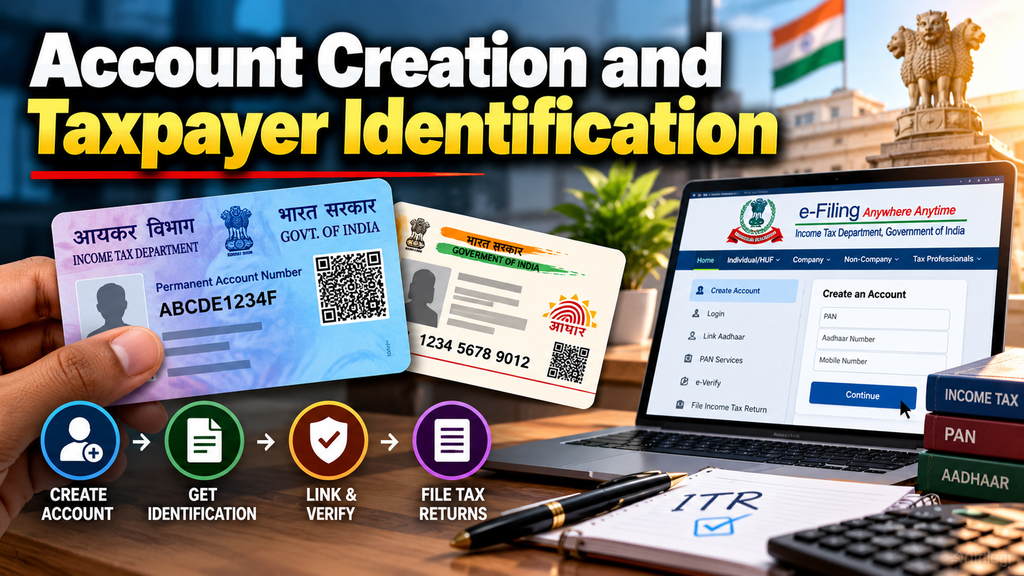
The process begins by setting up an account on the filing portal and authenticating identity. Providing the Permanent Account Number (PAN) and date of birth links the application to the central e-filing master database. Authentication is verified through a one-time password (OTP) sent to the registered mobile number.
2. Form 16 Parsing and Automatic Extraction
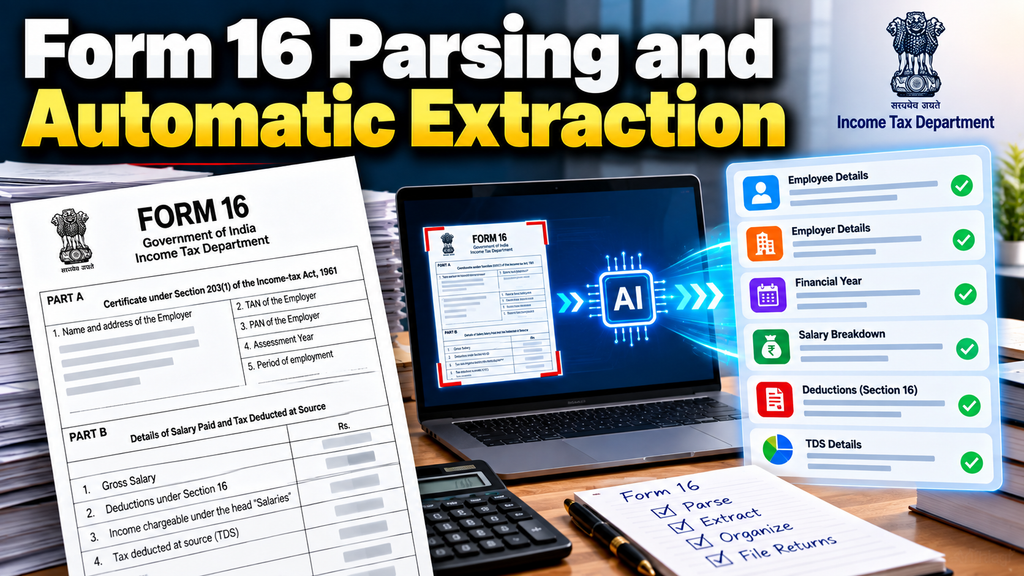
Uploading digital Form 16 PDF files from one or more employers pre-populates the majority of filing requirements:
- Personal identifiers, address records, and pre-validated bank accounts for direct tax refunds.
- Detailed salary head breakdowns under Section 17(1) (gross pay, allowances, and bonuses), Section 17(2) (perquisites such as medical and travel benefits), and Section 17(3) (profits in lieu of salary or termination payouts).
- Employer-verified deductions (under Chapter VI-A for Old Regime filers) and Tax Deducted at Source (TDS) credits matching Form 26AS records.
Income Aggregation and Capital Gains Integration
Comprehensive return preparation requires importing and categorizing non-salary income streams:

                     Income Ingestion Channels
                                │
        ┌───────────────────────┼───────────────────────┐
        ▼                       ▼                       ▼
  Salary & Form 16        Capital Markets         Other Incomes
  • Sec 17(1) Base Pay    • Direct Broker Sync    • Savings/FD Interest
  • Sec 17(2) Perquisites • Realized P&L Upload   • Rental Income
  • Employer TDS Credit   • Automated Aggregation • Crypto & Virtual Assets
Capital Markets (Equities, Mutual Funds, and Derivatives)

Tax liabilities differ significantly across market transactions:
- Equities & Mutual Funds: Importing realized profit-and-loss statements directly via broker API integration or spreadsheet uploads automatically bifurcates short-term capital gains (STCG) and long-term capital gains (LTCG).
- Futures & Options (F&O): Derivative trading transactions are legally classified as non-speculative business income rather than capital gains. Reporting F&O transactions allows taxpayers to declare legitimate operating expenditures (such as advisory subscriptions, trading terminal costs, hardware depreciation, and internet expenses) to offset gross derivative profits.
- Cross-Broker Aggregation: Uploading statements from multiple brokerages automatically nets offsetting positions, aggregates gross turnover, and determines net taxable gains.
Supplementary Income Heads
- House Property: Captures interest deductions on home loans for self-occupied properties or calculates net annual value and statutory standard deductions (30%) on let-out real estate.
- Professional / Freelance Receipts: Allows individuals with gross professional receipts up to ₹75 lakh to report income under Section 44ADA or declare itemized business expenses.
- Virtual Digital Assets (VDA) & Miscellaneous: Automatically tracks flat 30% liabilities on crypto asset gains without expense deductions, as well as online gaming receipts.
Final Review, Computation, and Verification
- Tax Regime Optimization: The filing engine evaluates net liability by comparing deductions claimed under the Old Regime against the lower progressive slabs of the New Tax Regime, recommending the most tax-efficient structure.
- Form Selection and Defect Verification: Based on the presence of business income, capital gains, or foreign assets, the system assigns the appropriate form (ITR-1, ITR-2, ITR-3, or ITR-4) to prevent defective return notices under Section 139(9).
- Loss Carry-Forward Reconciliation: Unabsorbed business or capital losses are tracked in the appropriate loss schedules to allow offsetting against future tax liabilities.
- Submission and Electronic Verification: After reviewing the gross tax liability, adjustments for TDS and advance tax credits, and net refund or payable balances, the return is transmitted to the Income Tax Department. The filing is finalized via Aadhaar-based OTP or net-banking e-verification, concluding the statutory filing requirement.