Significant Goods and Services Tax (GST) reforms announced around Independence Day are positioned to provide a major consumption boost to the Indian economy. Leading global brokerages, including Jefferies and Morgan Stanley, estimate these tax rationalizations could drive an incremental consumption demand of nearly ₹2.4 lakh crore.
From an equity investment perspective, two primary strategies emerge to capitalize on this fiscal tailwind:
- The 12% to 5% Transition: Focusing on mass-consumption items currently taxed at 12%—such as dairy products (butter and ghee), packaged nuts, and mobile handsets—that are slated to move to the 5% bracket. Reducing these levies improves everyday affordability and expands addressable volumes.
- The 28% to 18% Rationalization: Targeting consumer durables and personal mobility products currently placed in the highest 28% slab, such as entry-level passenger vehicles, motorcycles, and essential appliances like room air conditioners and refrigerators.
Reducing peak tax rates from 28% to 18% on consumer durables and two-wheelers offers the most compelling upside. Historically categorized alongside luxury goods, items such as small cars, commuter bikes, and cooling appliances have evolved into essential middle-class necessities. A 10-percentage-point tax cut significantly lowers acquisition costs, unlocking deferred demand ahead of festive sales cycles.

1. White Goods and Electronics Manufacturing: PG Electroplast

Business Profile and Revenue Composition
Operating in the electronics manufacturing services (EMS) and consumer durables domain, PG Electroplast is a contract manufacturer for leading brands such as Voltas, Blue Star, and Daikin. Rather than relying on retail brand equity, the business functions as a B2B manufacturer benefiting from aggregate industry demand.
The company operates across four main divisions: product manufacturing (room air conditioners, washing machines, refrigerators, and coolers), plastic moldings, consumer electronics (televisions and PCB assemblies), and tool manufacturing. The core product division contributes roughly 72% of consolidated revenue, with room air conditioners alone generating approximately 61% of total top-line receipts. A tax reduction from 28% to 18% on room air conditioners directly stimulates demand across its dominant revenue driver.

Structural Strengths and Capex Pipeline
- Backward Integration: As one of the most backward-integrated cooling appliance manufacturers in India, the company fabricates its own sheet metal parts and cross-flow fan assemblies in-house, securing a cost advantage over assembly-only competitors.
- Historical Growth: Over the past decade, EBITDA has compounded at a 42% CAGR, supported by a 38% top-line CAGR.
- Balance Sheet Health: While gross debt expanded from ₹276 crore to ₹409 crore, cash reserves stand at approximately ₹910 crore, maintaining a net-cash, zero-debt balance sheet.
- Capacity Expansion: Capital expenditure for FY26 is budgeted at ₹700 to ₹750 crore. Of this allocation, ₹400 to ₹450 crore is directed toward expanding existing air conditioner and washing machine capacities across Greater Noida, Rajasthan, and South India, while ₹300 crore is dedicated to establishing a new refrigerator business vertical.
Near-Term Headwinds and Valuations
Despite structural tailwinds, the company faces near-term cyclical friction:
- Q1FY26 Performance: Net profit contracted by 21% year-on-year, primarily due to early and widespread monsoon showers across June and July that suppressed summer heatwaves and weakened seasonal air conditioner demand.
- Channel Inventory: Lower-than-expected retail off-take expanded average inventory holding from 43 days to 77 days, leaving distribution pipelines temporarily choked.
- Revised Guidance: Annual profit growth expectations for FY26 have been moderated from an initial 20% down to a range of 3% to 7%.
- Valuation Normalization: Reflecting these near-term operating challenges, the stock’s price-to-earnings multiple has compressed to roughly 51x from a 3-year median of 60x, trading at a discount to peers such as Voltas, Blue Star, and Amber Enterprises (which trade between 65x and 84x).
2. Two-Wheelers and Commuter Mobility: Hero MotoCorp

Operational Scale and Market Positioning
Hero MotoCorp represents a direct beneficiary of GST rationalization on motorcycles. For FY25, the company posted peak revenues of approximately ₹41,800 crore, an all-time high net profit of ₹4,610 crore, and a 5-year peak Return on Equity (ROE) of 24.4%.
Market share performance highlights notable operational shifts:
- Overall Market Share: Total internal combustion engine (ICE) two-wheeler market share expanded from 29.5% in FY25 to 30.9% in Q1FY26.
- Entry-Level Dominance: The company commands a dominant 67% share in entry-level commuter motorcycles (anchored by brands like the Splendor), having expanded its presence by 800 basis points.
- Premium and Electric Mobility: In the premium 125cc segment, market share reached a high of 9.7% in June 2025. Electric vehicle penetration via the Vida V1 model similarly expanded market share from 7% to 10% by July 2025.
Demand Challenges and Corporate Governance
- Top-Line Stagnation: In Q1FY26, reported revenue contracted from ₹10,211 crore to ₹9,700 crore. While headline net profit appeared higher at ₹1,700 crore, that figure was distorted by an exceptional one-off gain of ₹722 crore, pointing to sluggish underlying retail sales volume across early FY26.
- Growth Guidance Gap: Against full-year industry growth guidance of 6% to 7%, Q1 delivery yielded only 3.5%, though high-frequency July indicators demonstrated an encouraging 21% year-on-year rebound.
- Leadership Transition: Executive turnover remains a point of observation, following the departure of former CEO Niranjan Gupta and the installation of an interim leadership structure.
- Valuation Advantage: Hero MotoCorp trades at an attractive multiple of approximately 18.7x to 19.8x P/E (against a 3-year median near 21x), offering valuation comfort relative to an industry average exceeding 30x, alongside a Price-to-Book multiple of 5.16x.
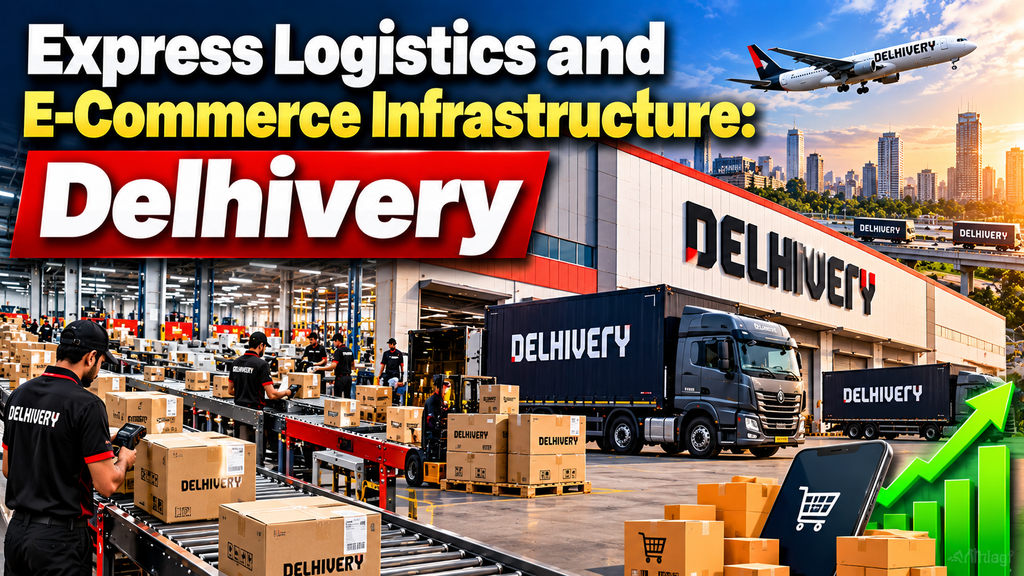
3. Express Logistics and E-Commerce Infrastructure: Delhivery
Strategic Logistics Tailwinds
A broader consumption upturn driven by GST rate cuts naturally accelerates domestic cargo movement and e-commerce fulfillment volumes. As India’s largest integrated logistics player, Delhivery provides horizontal exposure across retail logistics. With long-term industry projections forecasting Indian e-commerce gross merchandise value to expand from $60–$70 billion toward $240–$300 billion by 2030, systemic transport volumes are set for sustained expansion.
Operational Turnaround and Network Expansion
- Turnaround to Profitability: After absorbing substantial development losses in FY22 and FY23 (exceeding ₹1,000 crore), losses narrowed to ₹249 crore in FY24 before turning fully profitable in FY25. The company has sustained positive net earnings over five consecutive quarters, progressing from ₹10–₹25 crore to recent quarterly run-rates of ₹73–₹91 crore.
- E-Commerce Dominance: Express parcel operations generate approximately 61% of total top-line revenue, positioning the business to capture direct operating leverage as e-commerce shipments surge following consumer price drops.
- Inorganic Consolidation: The strategic acquisition of Ecom Express for approximately ₹1,300 crore consolidates market share and expands shipping throughput.
- Hub Infrastructure: Physical sortation capacity has been reinforced through new mega hubs, including a 1,00,000-square-foot automated facility in Lucknow and a 2,35,000-square-foot facility in Chandigarh.
- Valuation Multiples: Due to the early stage of normalized profitability, traditional P/E multiples remain elevated. However, its Price-to-Book (P/B) ratio has normalized to approximately 2.1x, down from a 5-year median of 3.1x.
Key Investment Takeaways
- Tax Relief as a Volume Catalyst: Dropping GST from 28% to 18% restores purchasing power across middle-class durable and mobility segments, providing volume recovery for beaten-down categories.
- EMS Supply Chains: Backward-integrated manufacturers like PG Electroplast provide direct operational leverage to expanding cooling appliance volumes once distribution channels clear seasonal inventory backlogs.
- Automotive Value: Established two-wheeler manufacturers like Hero MotoCorp offer defensive valuation multiples and market dominance in entry-level segments, positioned to capture rural and semi-urban festive demand.
- Logistics Integration: Pure-play supply chain operators like Delhivery provide diversified exposure to overall consumption growth and e-commerce parcel volume expansion across India.